Saturday, 27 February 2010

Capitalism Generates Prosperity?


When discussing political ideologies, I often hear many people say that "capitalism generates prosperity". It might do so, but any prosperity that is generated through this system is clearly not being distributed fairly. Some political parties might talk about the importance of distributing the prosperity created by capitalism, but history has clearly demonstrated that most people who are only interested in earning millions of dollars for themselves are not really interested in sharing their wealth with other human beings. Furthermore, certain businesses have become so powerful that several governments have become little more than puppets whose strings are pulled in order to ensure that the interests of the business community take top priority. How scary!

The US has often been associated with easy money, luxurious lifestyles, and "democracy". The US might be similar to life in a holiday complex for a relatively small percentage of the population, but there are millions of US citizens who are suffering. The Hunger Report 2010, authored by the Feeding America organisation, "shows that hunger is increasing at an alarming rate in the United States". Listed below are some highly alarming statistics quoted from the same report:

* Feeding America is annually providing food to 37 million Americans, including 14 million children. This is an increase of 46 percent over 2006, when we were feeding 25 million Americans, including 9 million children, each year.
* That means one in eight Americans now rely on Feeding America for food and groceries.
* Feeding America's nationwide network of food banks is feeding 1 million more Americans each week than we did in 2006.
* Thirty-six percent of the households we serve have at least one person working.
* More than one-third of client households report having to choose between food and other basic necessities, such as rent, utilities and medical care.
* The number of children the Feeding America network serves has increased by 50 percent since 2006.

Absolutely shocking! I mean, every country could go through hard times whereby access to certain supplies might be reduced, but the incomprehensible part is this: there are 37 million Americans who are in desperate need of food in the US while individuals such as Kim Kardashian and Hugh Hefner are allowed to retain the resources that could greatly benefit their communities to themselves! Such greed leaves me reeling!

Perhaps I am so bitter towards the lies of capitalism because I also grew up believing that living well depended on getting yourself a good education and working. I have an Honours degree in Psychology together with a string of other qualifications, but the money earned until now has never been sufficient to invest it or to save for an emergency. Living in a credit economy where salaries are kept generally low so that people have to borrow money to buy various items, slavery to debt is practically inevitable. There are individuals in the US who owe thousands of dollars to one or more banks and such money was borrowed to get an education! Why put so much pressure on people? If people are not going to be paid much, there should - at least - be free education, healthcare, housing, transport...

Of course, it is far easier to live in state of denial and to continue thinking that everything is fine while we are almost constantly exposed to "talent" shows and to music videos produced by millionaires. The problem is that once celebrities such as Lady Gaga have finished singing a song, they will just continue raking in more millions of dollars whilst many other millions of people will be trying to make up their minds about whether buying certain medicines might mean the loss of a meal or two...


Image

Saturday, 20 February 2010

A Jealous Lover Called Work

Once upon a time, work was regarded as a part of life. Besides work, many people often engaged in various activities, such as reading, writing, participating in group events, and so on.

During the past few years, it seems that work is becoming increasingly similar to a very possessive lover that will not tolerate any other rivals or interference. Indeed, with all the modern communication gadgets such as I-Phones, Blackberries, and laptops that could be utilised in free WiFi zones, it appears that it is becoming very hard for several individuals to be able to draw a line between work and the rest of their life activities. How many times has a family event been interrupted by a work-related SMS or phone call on one's mobile? For more and more people, leaving the office is no longer tantamount to finishing a day's work and to concentrating on other things. You did not manage to answer the 150 unread emails in your inbox? Don't worry! Just go home, log onto the Internet, and continue working from your bedroom! Friends and family can wait another day! Your health? Only weaklings complain about such things!

With the spectre of unemployment and the threat of competition that pervades capitalist societies, many people feel obliged to prove that they are indispensable to the company. Consequently, they tend to bite much more than they can chew. By having one's finger in so many things, the idea appears to be that of giving the impression that should they leave the company, the company's work will grind to a catastrophic halt.

The desire to feel indispensable has also fuelled a phenomenon called presenteeism. Put simply, many individuals remain in the office beyond business hours with the hope that even if they are not on top on things, they are still doing their utmost to achieve the company's objectives. Some also make it a point to show that most of the week-end was spent on work-related projects.

Over a period of time, the people who succumb to the temptation of making work the centre of their lives often realise that even though work might satisfy many of their psychological needs, such satisfaction comes at a heavy price. Spouses and friends often end up neglected, invitations to social events are turned down, and finding time to pursue other educational activities such as learning a new language are postponed to "sometime in the future". Furthermore, when people end up dedicating 12, 14, or 16 hours a day to work, there is little doubt that such strain is going to have a negative impact on one's health. I wonder how many families have broken down because of work-related pressures. How many friendships have wilted as a result of neglect. How many children have grown up with nannies since one or both parents are always at work. How many individuals have lost their lives or developed chronic illnesses as a result of work-related stress.

The question I keep asking myself is: why should one devote so much effort to increasing the wealth of some shareholders at the expense of one's own health, family, friends, personal and social development? Don't people realise that no matter how glorious one's current position might appear to be, a day will come when one will have to retire? And then what? Are the shareholders going to come to visit you in hospital and to hold your hand when you are so sick that you can barely ingest any food? Are the shareholders going to look after your loved ones?

I think that most societies should take a fresh look at the whole notion of work. Why do people work? What objectives should work allow us to achieve - as individuals and as a society? Shouldn't workers be treated with care from the cradle to the grave? Shouldn't work be more about building a better society characterised by healthy individuals rather than swelling the pockets of a relatively small number of people? The investigation continues...


Image

Sunday, 14 February 2010

This Blog is Not Dead!

No, this blog is not dead! I have been extremely busy with so many things during the last few months, but I hope to have some more Internet time for myself in order to publish new, thought-provoking posts in the near future. :)))


Tuesday, 1 December 2009

The Changing Nature of Romantic Relationships


Over the past few weeks, I have been able to count - at least - 4 people who went from being in a romantic relationship to single. One of these individuals had even, up to fairly recently, been planning to get married! All these break-ups made me wonder whether many people are finding it increasingly hard to work through certain problems in a relationship and to simply move on in search of something better. Could it also be that more and more people are less willing to commit themselves to long relationships in order to enjoy a higher degree of personal freedom?

In the absence of any scientific studies close at hand, it is hard to come up with any statistics about this issue. Rather than focusing on how prevalent such trends are, I would prefer to analyse the reasons underlying the aforementioned phenomena.

As more importance is given to the individual in the Western world, it could seem only natural for many people to dedicate more time and energy to themselves rather than to caring about others. Consequently, if a partner develops an addiction to something which is harming the relationship, it might seem better for certain individuals to just dump the partner instead of trying to help out in various ways.

The use and development of communications technology and the introduction of countless social networking sites appears to have fuelled the belief that a better partner could just be a mouse-click or an email away. Given the temptation and the ease to look for an "easier" relationship, many people are probably finding it less difficult to ditch a partner when confronted with certain problems.

The Internet has also made it considerably easier for thousands of human beings to obtain sexual pleasure without going through the process of getting involved in a lengthy romantic relationship. Such sites also allow people to go in search of those specific things which really turn them on. A Glamour article (December, 2009) that analysed the issue of women who have sex with people they meet via the Internet mentioned a website whereby "users select what they're into: one-on-one sex, discreet relationship, erotic chat/email/phone fantasies or group sex. Forget waiting until the third date; forget dating altogether. Most users on these sites just want sex, and they're fuelling a booming trend" (p. 162).

At this stage, what could be said about the future? Will there be more people who prefer to just hop from one fling or short-term relationship to another without even bothering about the type of commitment that is associated with marriage? Will there be a huge increase in the number of individuals who are over 35 and single? Will there be more loneliness as a result of a growing tendency to just be with someone for a brief spell of flirting and sexual activity? One final question: assuming that a person has only had casual sexual and short-term relationships over the course of his/her lifetime, how many of those individuals would come to visit that person when he/she is fairly old and perhaps dying from an incurable illness?


Image

Wednesday, 28 October 2009

A Trip to Spain...and Back to Malta!


My wife and I returned from a brief holiday in Spain yesterday afternoon. The time we spent in Madrid and in Toledo was magical. It really felt as though we had visited another planet! Faced with the many beautiful things that Spain has to offer, neither one of us was particularly enthusiastic about returning to Malta.

When it comes to living in Malta, there are some very positive points that should be mentioned. One is the high level of safety that exists. Another positive point lies in the small distances that exist between one place and another; this makes it easy to visit many spots in one day.

Once a person has spent some time abroad (working or studying or even on a holiday), comparisons are virtually impossible to avoid. My heart sinks when I start making those comparisons and when I become aware of the several negative points associated with living in Malta. Since I had spent over a year working in Spain, it is extremely easy for me to list a number of problematic issues related to life on the Maltese Islands:

1.) Low salaries: At little over EUR 600 a month, the minimum wage in Malta is a joke. Furthermore, with the exception of certain jobs in a small number of areas, many people are paid a pittance when compared to how much they would earn to do the same thing in several other countries.

2.) High cost of living: There was a fairly long time during which Malta had the highest inflation rate in the European Union! How is the average worker supposed to live comfortably when they struggle to make ends meet with the relatively little money that they receive every month? Whilst in Spain, we took a taxi from Puerta del Sol to the Barajas airport (a drive of around 20 minutes). The trip cost us around EUR 22,00. In Malta, one might easily end up paying the same amount of money to take a taxi from Ta' Xbiex to St Julian's (a drive that is often less than 10 minutes long).

3.) Public transport: The public transport system in Malta is a disgrace. Many buses are incredibly old, dirty, and uncomfortable. If you live in, say, Tarxien and need to go to work in Mosta, you would need to wake up very early in order to make sure that you get to work on time. In Spain, the public transport system is absolutely great! The use of the subway allows one to travel from one part of a city to another in only a few minutes. The buses are clean and air-conditioned.


4.) Entertainment: Malta is so small that after a few months, one would have done it all, seen it all...After a while, one ends up going to the same places, seeing the same people, doing the same things. Yes, there are exhibitions here and there, but it can be expensive to attend some of them and it may also be hard to go as a result of the poor public transport system. In a place like Spain, it is so easy to go from, say, Madrid to Toledo and feel as though you are visiting another country!

5.) Degree of conservatism: Although there have been some changes during the past few years, Maltese society could still be regarded as a very conservative one. To me, it is ridiculous that there are still huge debates about whether there should be a condom machine on the University campus! *rolls eyes* When it comes to religion, although fewer people are going regularly to Sunday Mass, the Roman Catholic Church is still quite powerful in Malta. Indeed, a huge number of youth organisations are somewhat linked to the Church.

6.) Making friends: Since many Maltese people do not move from their family homes until they get married, it is plausible to say that most individuals born in Malta stick to the same group of friends throughout their lives. This group would normally include childhood schoolfriends and some other people encountered at work/in some religious organisation. Once it is formed, a Maltese social group tends to be quite strong and does not allow an easy entry to "outsiders". This situation is very different from the one witnessed in other European countries whereby individuals often move to other cities for various reasons (such as finding a good job). In such cases, the person who moves has to start from scratch and this makes it easier to move from one social group to another. Furthermore, the fact that there are more secular groups abroad makes it easier for non-religious people to make friends.

In a nutshell, I strongly believe that Malta is a great place for people who have a certain type of job, are religious, do not have to depend on public transport, are fairly conservative, and who have belonged to a strong social network for many years. I do not match this profile and I do not, therefore, feel very comfortable living in Malta. Yes, things will probably get better as time goes by, but life is short and I am not willing to wait decades until Malta can offer what I can find today in many other countries...


Tuesday, 18 August 2009

To Love and to Be Loved


Like millions of other teenagers, shortly after my 13th birthday, I was really looking forward to having a girlfriend. Unfortunately, the fact that I was attending a boys-only school and that I had no young female relatives made it quite hard to have access to potential girlfriends.

As time went by, the desire became stronger, but I was not having any success at all. All my friends were males and they did not have any female friends. Whenever we used to go out, my mind used to be flooded with images of gorgeous girls and my heart used to be racing like a Formula One car! During those times (and throughout most of my teens), I was extremely shy and that certainly did not help me to start a conversation with a girl I fancied.

By the time I was 18, I had still not had a romantic or sexual relationship with a girl. As more and more people of my age group were talking about having sex here and there as well as about moving from one relationship to another, I felt very sad. It seemed as though everybody was managing to find somebody to love whereas I often felt as though I were invisible.

Shortly after my 19th birthday, the use of the Internet allowed me to get in touch with various single girls. I went out on several dates, but virtually all my encounters were sexless one-night stands. Looking back, I am aware that my appearance during that time could have been better, but it was very painful to go from one date to another - hoping that something would eventually happen - only to be told that it would be better to be "just friends". Of course, whenever things went wrong, the usual phrases were used: "you're not my type", "I got back with an ex-boyfriend", "there was no chemistry", etc. There were even a couple of instances whereby the girls were even fairly malicious - one of them (who is still single) told me that we could not even be friends after our first and only date. Another girl saw me shortly before we met and said that I was so "not her type" that she was not even interested in being just friends!

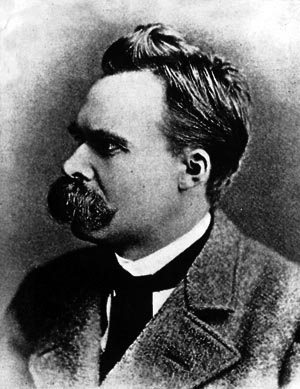
With such a shocking dating history, I started wondering whether I would ever find somebody to love. A person with whom I could share the ups and downs of my life. An individual who would care about me. I started worrying that I was going to end up like Friedrich Nietzsche (photo posted above). The latter had been a very influential philosopher, but his life was characterised by a horrendous degree of loneliness and unrequited love.

My fears were washed away a few years later when I had my first romantic relationship. Although I am presently happily married, I have occasionally come across blogs written by individuals who are in their late 20s/early 30s and who are still virgins/have never had a romantic relationship. Whenever I read some of their posts, their feelings and thoughts mirror a great deal of what had gone through my mind when I was in a similar situation.

As I come across such blogs, one question comes to my mind: is it becoming harder for certain people to love and to be loved in our times? Considering the individualistic cult - which encourages the belief that if you are fine, you do not have to worry about anyone else - and the enormous pressure to look/dress in a specific way, it is plausible to argue that a number of people might be feeling excluded and totally forgotten when they fail to conform to society's expectations. As a person feels increasingly distant from most of the other members of a particular society, there is a greater likelihood for that individual to suffer from a number of behavioural problems (e.g., depression).

When talking about involuntary single people who have reached a certain age and have still not been in a romantic/sexual relationship, the feeling that "something is wrong with me" could be highlighted by the fact that this reality is almost completely ignored in literature and in most cinematic/TV productions. I remember that even though the Ally McBeal TV series had shed some light on the problems faced by a single woman in trying to find a romantic partner, she was clearly not a virgin or a person who was still trying to go on her first date. Many issues that a virgin has to deal with are different from those of an individual who has had some sexual experience.

Talking about TV productions, I believe that these could often be detrimental in the way that they portray a number of people who do not conform to Western society's expectations. The movie about the 40-year-old virgin was regarded as a comedy, suggesting that a human being who gets to that age and is still a virgin is a figure of ridicule.

Tackling this matter in a scientific way, there must be reasons to explain why Person A goes out there and is hit upon by various individuals whereas Person B may go out there every day and feel as though he/she is invisible. I think that, whether we like it or not, looks play a big part in all this. Many societies have been brainwashing us so much about the importance of having the slender, tanned, athletic physique that whoever does not fit into that equation might have a harder time in finding a partner. In my case, I still remember that some of the girls did not seem to be interested because of my complexion and because I was not 6 feet tall. :) Dress is also important. Although it is not necessary to wear the most trendy items, it is important to wear something which transmits the message that "I care about the way I present myself". The same discourse applies to hairstyles and to other accessories, such as the sunglasses one wears.

Social skills are also extremely important. The subject matter of a conversation, the tone used, the dominance of a conversation....these are all things that could make a difference.

Of course, all this is easier said than done. A person who is obese cannot expect to change overnight. Having said that, weight is thankfully one area that could be controlled. It is much worse when we are dealing with characteristics whereby medical science still cannot be of great help (are there any pills that would allow one to grow taller???).

It is very understandable that the thought process following a rejection or surrounding one's chronic single status could be quite painful. Indeed, a 27-year-old female blogger wrote that "I am trying not to dwell on the reasons why no-one has ever been interested in me romantically, or at least not enough to do anything about it, because it is too depressing, and frankly, too humiliating. Terminal loneliness is fairly ghastly at the best of times, and when a difficult patch in life coincides with the realisation that the overwhelming majority of ones’ close friends are married, engaged or likely to be that way within the next year, it’s pretty hard to take. I think even my mother, previously the champion of remaining independent and only being ‘friends’ with men – and she doesn’t mean the sort with benefits – has started to realise that there is something fundamentally off about a twenty-seven year old daughter who has zero romantic history. Single and twenty-seven is one thing. Twenty-seven, with no past entanglements at all is quite another."

As a chronically single person grows older and more of their friends become entangled in romantic relationships or start having families, it becomes easier to think that "something must be wrong with me". Furthermore, as previously single friends are no longer available, it is very likely that such people will experience severe loneliness. Katya, a blogger in her 30s, wrote the following about many of her weekends: "A lot of my weekends I don’t do much at all, and what I do do doesn’t vary much – grocery or clothes shopping, watching TV at home, a trip to the shop to buy a newspaper, a visit to church (yes I go to church but that’s most definitely not why I’m a virgin. I disagree with a fair few of the church’s rules on sex and relationships). Obviously all of this is done alone. Often the only people I speak to are shop assistants as I hand over money".

I strongly believe that many societies could do more to help those people who yearn to love and to be loved. Local councils could organise events for single individuals to meet and to do things together. Even if no sparks fly following a couple of events, it would still be possible to develop new friendships with people who are in a similar situation. Local councils could also organise a number of events aimed at boosting the participants' self-confidence. Of course, for such events to be organised in the first place, it is fundamental to live in a caring society. A society where no person is left behind.

It is hard to regard most Western societies as caring ones. Yet, it is never too late to start doing something to change the status quo. It is never too late to start contributing to the building of a better world for everyone.


Image