Monday, 10 September 2007

Reflections about Jesus


I was born and raised in a Roman Catholic family. My Christian faith was a very important part of my life until I was about 16 years old. Shortly after I started reading Nietzsche's works, I slipped away from the Roman Catholic Church. I lost all my faith and became a fervent atheist. I reached a point where any religious talk was so annoying to my ears that I used to engage in very heavy discussions with anyone who voiced such discourse!
A year or so after turning into an atheist, I realised that I had no evidence to show that God was merely a human invention. I was, consequently, drawn to the agnostic position whereby I could not really say whether there was a God or not. I spent around 4 years living as an agnostic.
The strange thing is that during all that time, I never lost my interest in religion. Even though I still found it extremely hard to believe in something that I could not see, I kept reading books about religious matters. At university, some of my closest friends were preparing to become priests/missionaries. I remember thinking to myself that if I did not want to know about God, it seemed as though he was not equally willing to let me go!

In 2003, I went to Spain. I spent more than a year living in Madrid. During my time in the Spanish capital, I came across a number of religious creeds. Although I was initially very sceptical about any religion I read about, I gradually felt a desire to give faith another chance. I befriended some members of an Evangelical Christian organisation. They were very nice and honest people, but they would hardly ever talk about anything that was not somehow related to the Bible. Furthermore, they took the Bible very literally.

Although I enjoyed spending time with the Evangelical Christian friends I met in Spain, I did not really like their Sunday gatherings so much. These events were normally characterised by a great deal of singing, hand-clapping, crying, and other emotionally-charged behaviours. The pastors usually shouted as they spoke to the audience. There seemed to be a huge emphasis on drama rather than on inducing people to reflect so that they could do something practical to change the world. This is not meant to be a critique of Evangelical Christian gatherings; I just did not feel so comfortable in such a setting. I also disliked the fact that the Bible was often discussed without much reference to the reality of one's everyday problems. Social and personal difficulties were mentioned, but these were frequently dealt with in a very simplistic way, failing to take into consideration the complexities of the human condition.

Though disillusioned with the Evangelical Christian organisation, I still harboured a strong interest in Jesus's teachings. I then came across a book called Salvar a Los Ninos Soldados by Gervasio Sanchez. This book focused on the work of Chema Caballero, a Spanish missionary in Sierra Leone. As I moved from one chapter to another, I felt a great joy in my heart. Unlike several priests I had met until that stage in my life, Chema was quite different; he managed to support the Catholic Church without trying to impose his views on the readers. He also came across as a person who enjoyed thinking rather than simply regurgitating dogmas. The book had a profound impact on my views about God. Indeed, I decided to identify with the Catholic Church once again and to take a fresh look at Jesus.

As I was still going through that phase, I found another book which also had a huge impact on my faith. Written by Vicente Romero, it was called Donde Anidan Los Angeles. Although the book was not about the Roman Catholic Church, it focused on several Catholic missionaries. To my surprise, a section of the book was devoted to Chema Caballero and his remarkable work with child soldiers in West Africa! Once again, I noticed how the missionaries who viewed human suffering first-hand on a regular basis had very interesting views about God and the Church; faced with countless complex problems, they tended to retain the love of humanity associated with Jesus while being less dogmatic when analysing various issues.

In January 2005, I left Spain to go to El Salvador. During the few months that I spent in the latter country, my interest in religious matters waned a bit as I focused on settling down in a new country. The stay in El Salvador did, however, help me to learn more about Archbishop Romero, a remarkable individual who was assassinated in 1980. I also read a bit about the admirable work of the Jesuits in the country over many years.

I returned to Malta in June 2005. My interest in the Catholic Church was fired up for a while, but in the absence of any nourishment, my enthusiasm waned once again. I eventually slided back to my agnostic stance. Wendy came to Malta in October of the same year and for a fairly long time, religion became little more than an interesting topic to discuss with other people.

My mom passed away in March 2006. Contrary to all expectations, my family deserted us completely. With Wendy's family far away in El Salvador and my family acting in an incredibly distant way, we felt like orphans. Support from friends was also very hard to find since many appeared to be more interested in other things rather than in nurturing the friendships.

As time went by, Wendy and I developed some new friendships. Some of them were members of the Church of Jesus Christ of Latter Day Saints (the members are often referred to as Mormons). These new friends seemed to understand the meaning of the word "friendship"; they were there with us to share the good times and they were also there to help in times of need.

The Mormon Church does not have many members in Malta. This creates a certain familiarity among the people who attend the services every Sunday. As a Christian organisation with a focus on Jesus Christ, it promotes some very positive values. Having said that, certain beliefs can be very hard for individuals with a Roman Catholic background to digest. For instance, Mormons are not supposed to drink tea or coffee. Drinking wine is also prohibited.

Brushing aside some of the beliefs associated with the Mormon Church, virtually all the people we met who belonged to that organisation were really friendly. Unlike most of the other individuals I knew, they were genuinely interested in spending quality time with friends.

When I wondered about why the many Mormons we met were so pleasant, I drew the conclusion that this was mainly because of their efforts to apply the teachings of Jesus to their lives. I had always believed that Jesus was a remarkably positive person, but I had met few people whose Christian principles were consistent with their everyday actions. With the Mormons, it was quite different.

Nowadays, I still have many friends who are Mormons. Having said that, I feel more attracted to the Roman Catholic Church. I believe that the latter provides a better chance to those people who admire Jesus to translate their faith into action in the everyday world.

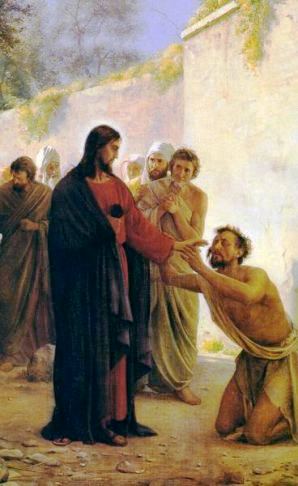
At this stage, what are my current views about Jesus? To me, he is a role model. Having lived so many centuries ago and having never written any books himself, he might be misunderstood by countless individuals. Yet, I believe that Jesus was a person who wanted to show us that we could all live happily together. He taught us about the importance of love. He was interested in human wellbeing and his several healings bear witness to this. He often talked about his heavenly father and I do not feel that I have anything to lose by believing in God. At the end of the day, how could I show that God is a myth?

Unfortunately, many people perceive God as a stern police officer that is always ready to judge and punish us every time we do something wrong. The God I believe in, represented on Earth by Jesus, is a God of LOVE. Real love always seeks to heal, to improve, to build. I always say to myself that if I, an imperfect human being with all my biases, am able to forgive the person who has hurt me most in my life, imagine what God - the most loving entity in the universe - is capable of doing!!!


In the past, when I brushed God and Jesus to the side, I tried to find lasting happiness by resorting to other things. For a long time, I also believed that I would always be able to rely on a number of individuals considered as extremely good friends or family members. Experience has clearly shown that all those people who have not acted in a Christ-like way have ended up going their separate ways in order to pursue a life dictated by very selfish motives.

To conclude, I would like to say that the main factor which prevented me from believing in God for a long time in my life was the thought that God might be a human invention. Nowadays, that possibility no longer troubles me. Regardless of whether God exists or not, the values promoted by Jesus are good ones. The notion of transforming this universe into a place characterised by peace and love does not need to rest exclusively on faith; it is a goal which all true Catholics should aspire to achieve. The transformation of the universe into a better place need not await a miracle; we can all contribute to it starting from today. Starting from now.

Image taken from: http://oneyearbibleimages.com/jesus_heals___1.jpg

Sunday, 9 September 2007

Cards and Photos

Yesterday afternoon and earlier on today, I was having a look at various birthday cards that I had received several years ago. I also opened some of my photo albums. As I read the words written on some of the cards, I could not help feeling a bit sad. I felt pretty much the same as I looked at many photos.

As a person, I love cards and photos. They help to remind us that we are loved and that life has so many beautiful things to offer. Yet, the same two things can also be a reminder of broken promises and of the fact that loss is a part of life. In 2006, my mom passed away and one of my best friends also grew distant from me. I felt very angry and and terribly wounded. I thank Wendy for having helped me throughout the healing process, but the scars are still there.

When I saw countless photos of my mom and of the many good times we shared, I felt as though someone was squeezing my heart. I felt the same when I was reading the birthday cards she had given me over the years. The melancholy was strengthened when I saw the beautiful words about lasting friendships penned by various friends who have almost completely disappeared since the days when those cards were written.

To me, friendship is extremely important. It is one of the most beautiful things in this world. I do not treat my friends as though there were a contract stating that the friendship would only last for a specific period of time. I am one of those individuals who still believes that friendship should be eternal. There might be misunderstandings and conflicts, but true friendship can overcome all such things.

I would not like to generalise, but it seems that several people befriend others for very selfish reasons. Once an individual is no longer necessary to achieve certain goals, he/she is dumped and totally forgotten. Sadly, I have seen this happen MANY times!!! Just to mention what appears to be a fairly common situation, numerous individuals seem to be extremely friendly when they are single. As soon as a romantic partner is found, a huge change becomes noticeable; the former friendliness is replaced by a distant and uncaring attitude.

In spite of my negative experiences, I am still confident that there are many people out there who believe that true friendships exist and that such relationships should last forever!

Monday, 3 September 2007

Blogs We Luv

I recently answered some questions that were available on the following very interesting site: http://blogsweluv.com/

If you would like to have a look at my answers, just click on the above-mentioned link and enjoy!!! :)

Sunday, 2 September 2007

My Current Position on the Political Compass

While reviewing Confessions of an Atheist, one of my favourite blogs, I came across a very interesting test that should show a person his/her current position on the political compass. The above diagram features the way in which the compass is divided.

Should you want to see my position on the political compass, please click here: http://www.politicalcompass.org/printablegraph?ec=-9.25&soc=-5.54

If you would like to go through the test to see where YOU stand, please click onto the following link: http://www.politicalcompass.org/test

Diagram source: http://www.politicalcompass.org/test

My Wedding Anniversary


Today marks my first wedding anniversary. I am so glad to have Wendy in my life! She is a unique person and I feel so happy to be with her! We understand one another so well and we have always been able to weather all of life's storms together.

Wen, te quiero muchisimo!!! Eres mi luz en la oscuridad, mi esperanza en la desesperacion, mi sonrisa en la tristeza, mi medicina en la enfermedad, mi riqueza en la pobreza...eres mi futuro en el presente!

Saturday, 1 September 2007

Living in a Free World? A Myth in Capitalist Societies


Many people say that since Josef Stalin and Saddam Hussein are no longer around, we live in a relatively free world. Elections are now held in numerous countries. Furthermore, we are faced with countless choices that our parents never had. Such observations suggest that the people who live in countries where elections are held are all free, able to spend their lives the way they want to. Does this really happen in those places?

Let us take Malta as an example. There are, at least, three political parties in Malta and elections are held every five years or so. Although the parties are supposed to focus on issues that are relevant to the country's inhabitants, there seem to be many times when the people have very little say as to the exact nature of the proposals that enter the election arena. In any case, the fact that Maltese individuals are able to cast a vote every few years makes many of them feel that they are living in a free country. To me, elections are a tool that the people use to either keep a party in government or to rope in a new one. Fair enough, the fact that a person will not end up being tortured when he/she favours a particular party shows that there is a certain amount of freedom, but this does not mean that Maltese people are free to spend their days the way they want to.

Elections come once every five years or so, but going to work is an almost daily occurrence for most Maltese individuals. The rather astonishing thing is that while many people are quick to identify dictatorial tendencies when analysing political parties, hardly anyone appears to notice how anti-democratic most workplaces appear to be.

Before delving deeper, what exactly does "going to work" mean? For most people, this represents spending, at least, eight hours of their lives every day for most days of the week going to a place where a great deal of their personal freedom is stolen from them. They are bossed around according to the whims of their directors. They have little to no say concerning the ways in which the company should be run. Salaries and working times are dictated in a top-down way and are rarely revised throughout the year.

In many companies, the directors seem enjoy their dictatorial positions. Whenever they appear around their employees, the latter typically stand to attention. Furthermore, the employees are frequently petrified when facing a director in case they say something which is not "right" and which could consequently prejudice their position in the company.

Focusing on first-time job seekers, these usually have very little bargaining power with an employer. They cannot say that since they have a certain amount of work experience, their starting salary should be fixed at a certain level. University qualifications can sometimes be helpful, but given the fact that various degrees seem to have little relevance to countless jobs, various employers ignore such qualifications when determining an employee's salary.

When I talk about these issues, a common reaction is: so, what should a person do? Remain unemployed??? Of course not! Unfortunately, the fact is that in our current age and time, most people are obliged to choose the lesser of two evils - surrender to the capitalist dictatorship or starve without enough money to survive! Taking into account these two options, it is quite hard to consider them as constituting a real choice!

To conclude, I believe that two things are fundamental if people are really interested in making a positive difference in the working world. First, employees need to unite; they need to share their concerns and work together on how they could improve their conditions at work. Second, apart from mobilising at work, employees also need to join social organisations which promote workers' rights and which have an impact on the country's legislation with respect to working conditions. Sadly, although countless individuals in today's world are free to vote for a particular political party, freedom is still terribly limited when analysing other very important aspects of a person's life.


Image source: http://www.answers.com/topic/anti-capitalism-color-gif


Amnesty International's Report 2007


In the past, Malta hardly ever appeared in Amnesty International's (AI) annual international reports. At a first glance, some might have interpreted this as a demonstration that human rights are hardly ever breached in Malta. Of course, this is surely not the case! I suspect that Malta's absence in the aforementioned report was more due to the lack of precise information being submitted to the offices in London about the local human rights situation.


As far as 2007 is concerned, a section of the report was devoted to Malta. More specifically, the report stated the following:


MALTA


REPUBLIC OF MALTA


Head of state: Edward Fenech-Adami

Head of government: Lawrence Gonzi

Death penalty: abolitionist for all crimes

International Criminal Court: ratified


Journalists, human rights activists and others were subjected to arson attacks for speaking out against racism. Irregular migrants continued to be subject to a policy of automatic detention. Conditions in migrant detention centres were harsh and insanitary, and came in for criticism by the European Union (EU).


Racism


Overt racism continued to increase. The non-governmental coalition, the European Network Against Racism (ENAR), noted that debate in the news media and on the Internet was increasingly hostile towards immigrants and that racist attacks and hate speech were on the rise.


Arson attacks targeted individuals or organizations that actively worked to protect the human rights of migrants and refugees or denounced racist and discriminatory attitudes and actions in Maltese society. Racist speech and attacks appeared to find increasing legitimacy within Maltese society.


• In early March the house of a poet was set on fire in an arson attack just a few days after he launched a book of poetry promoting tolerance and refugee rights.
• On 13 March, seven cars belonging to the Catholic Church's Jesuit Community were destroyed by fire at night, shortly before publication of the Report on Racism and Xenophobia in Malta by the European Monitoring Centre on Racism and Xenophobia (EUMC). The Jesuit Community is EUMC's partner in Malta. On 11 April a car belonging to a lawyer working with the Jesuit Refugee Service was set alight and destroyed.
• On 3 May the editor of the weekly Malta Today newspaper had his house torched by arsonists. He had published an editorial on racism and immigration shortly before the attack.
• On 13 May the home of a journalist from the daily newspaper, The Malta Independent, who had denounced the extreme right and written about racism and immigration, was attacked. In the early hours, arsonists leaned five burning tyres filled with petrol against her back door. Smashed glass and petrol were spread on the road in front of the house, in an apparent attempt to prevent her family escaping or to block help arriving.


Migrants and asylum-seekers


Malta maintained its automatic detention policy for irregular migrants. On arrival they are held in closed detention centres for up to 18 months and later transferred to open centres. The policy clearly violates international human rights laws and standards. Migrants were detained without first having a proper medical screening, potentially putting the health of other detainees and detention centre staff at risk. Non-governmental organizations and journalists were still not allowed access to migrant detention centres.


Four administrative detention centres for asylum-seekers and migrants were in deplorable condition and failed to meet legally binding international standards, the EU Committee on Civil Liberties, Justice and Home Affairs reported in March. A delegation of the Committee, visiting four detention centres, found that the Hal-Safi detention centre "was like a cage", without sheets on the beds, broken and dirty mattresses, and no heating. Hygiene conditions were intolerable, with broken showers, no hot water, and toilets without doors and in a state of disrepair. At the Hal-Far centre, delegates found high levels of mosquitoes and rat infestation, and appalling conditions in bathrooms. Some residents who had fled the Darfur region of Sudan said their asylum applications had been rejected on the grounds that "they could have moved to safer areas of the country". At the Lyster Barracks centre, there were only two functioning toilets for more than 100 people, no provision of sanitary towels for women, and no area outside for fresh air and exercise, the Committee reported.


Domestic violence


The Domestic Violence Act came into force in February, and the Commission on Domestic Violence created under the Act was set up in March. The Commission's responsibilities and competencies include awareness-raising; developing and outlining strategies to identify problems of domestic violence so as to offer better protection to victims; suggesting areas for research; educating the general public; and identifying training for professional groups. The Commission is required to publish an annual report.